Affordable Benefits for Small Businesses? RewardJet Makes it Possible.

Posted by Maggie Gallagher on Tue, Jul 30, 2019 @ 11:18 AM

Generous employee benefits can be very attractive to sought-after talent, and these benefits can also keep employees happy and satisfied at work. For smaller businesses, though, providing them is easier said than done.

This challenge often forces entrepreneurs, freelancers, and gig workers to avoid businesses that aren’t able to take on those responsibilities. However, there’s something many of those companies don’t know: They can afford benefits that rival those offered by Fortune 500 companies; they can become RewardJet members.

RewardJet was the dream of two partners who wanted to help hardworking entrepreneurs. As entrepreneurs themselves, they saw a huge, underserved market and an opportunity to truly make a difference in the lives of millions.

d94e63c7-115f-4995-a5d8-6e8656264ce3-photo_upload-rewardjet_wordmark_color

Look and You Shall Find

The future looks quite bright for RewardJet as new partnerships will see them expanding globally over the next two years. From two men with a dream to a multinational platform, RewardJet is poised to change the world of company benefits.

“One founder’s wife works for a Fortune 500 company,” says cofounder Kevin Dory, “and the perks she gets through her company are often not nearly as good as the ones we offer through RewardJet.”

The founder and his wife realized how good these offers were when they planned a weekend getaway to Miami and were able to save hundreds of dollars on their hotel room, which wasn’t bad for a short trip.

RewardJet is not, however, just another perks site offering discounts. They want small businesses and independent workers to feel as if they have the power of thousands of people in their corners, even if they’re only a team of two.

“RewardJet advocates for the millions of people who drive our economy yet still don't have health care, retirement plans, or any of the other perks and benefits large companies offer.”

Trying to Fulfill All Kinds of Needs

Employees and employers are increasingly searching for personalized perks and benefits, but millennials and Gen X customers don’t always look for the same thing. These kinds of changes in workforce demographics require employees to adapt and to adjust their benefit offerings constantly.

“What we are really passionate about is the ability to provide access to health care for a huge number of people who otherwise would not have health insurance,” says Dory. “This is life changing, and this is why we exist.”

The company offers a wide range of health services, which start at $10 per month for a single person and go to less than $90 per month for fully ACA-compliant health insurance. Depending on the plan selected, the individual will have access to over 900,000 providers and will get a real prescription drug plan (not a discount card), with only a $10 co-pay for generics and huge discounts on brand-name drugs.

RewardJet also recently teamed up with Goldman Sachs to make it easy for members to save for retirement.

Small businesses across the United States can now make the decision to offer benefits and, most importantly, can choose the offerings that are desirable for potential new hires.

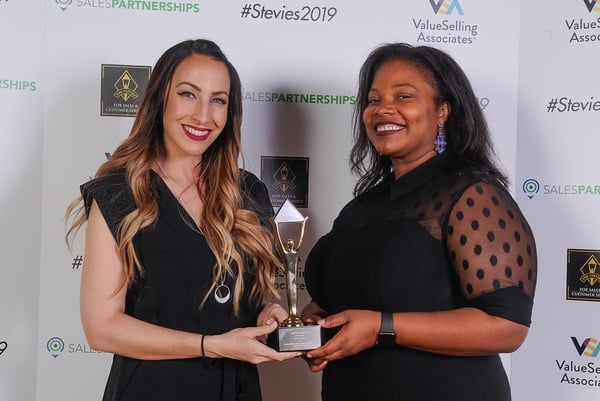
Sara Wolkwitz, Vice President of Partnerships at RewardJet, recently won the Bronze Stevie® Award for Female Executive of the Year in the Business Services category of the Stevie Awards for Women in Business.

Interested in winning a Stevie Award for Women in Business?

Request the entry kit

Topics: stevie awards for women in business, health care awards, business services awards

Real Estate Offers within One Day? Tech-Oriented Firms Hope to Upend the Home-Selling Process

Posted by Maggie Gallagher on Wed, Jul 24, 2019 @ 09:12 PM

For a lot of consumers, owning a home is the ultimate symbol of freedom, affording you the opportunity to customize to your heart’s content.

When it’s time to sell, though, real estate ownership can start to feel like the exact opposite of freedom. Suddenly, many find themselves preparing for countless showings while waiting for offers and potentially making last-minute renovations to lure buyers.

Offerpad is among a crop of U.S. companies trying to fundamentally change that process. The firm, which is based in Chandler, Arizona, USA, allows home sellers to upload information about their properties, including optional photos. Home sellers then get their purchase offers within 24 hours. The company bases its pricing on a custom algorithm, which compares the home against similar properties that recently changed hands in the area.

offerpad (2)

After the customer signs the necessary documents online and Offerpad conducts a home inspection, the seller is ready to set a closing date. According to the company, it can close in as little as 10 days or as many as 90 days. Clients don’t have to worry about showings or open houses, and they don’t have to make any headache-inducing concessions to buyers.

“Traditionally, selling or buying real estate is wrapped up in so much hassle that people often avoid it altogether,” says Offerpad spokesperson David Stephan. “By making it easy, Offerpad hopes to eliminate the stress from people’s milestone moves.”

Support from Venture Capital

Offerpad, which real estate veterans Brian Bair and Jerry Coleman started in 2015, is part of a growing group of companies trying to use technology to reshape the market. So-called “iBuyers,” such as Opendoor and Zillow, are using proprietary pricing algorithms to purchase and to resell homes, and the national brokerage firm Keller Williams is set to launch its own home-buying operative in May.

In the case of Offerpad, Stephan says the company is trying to appeal to people who are disillusioned with the more conventional home-selling approach.

“Real estate doesn’t need to be the frustrating, messy ordeal it’s been for decades,” says Stephan. “With our service, home sellers and buyers now have the better option of closing and moving at their convenience, without the hassle.”

Unlike older companies that paid cut-rate prices for mostly dilapidated housing, iBuyers serve a more mainstream client base. There is a flip side to the convenience they offer their customers, though. With Offerpad, for example, home sellers pay a service fee between 6 and 10 percent, which is higher than what traditional agents charge. However, once the home is sold, the company pays for any concessions to the buyer, as well as maintenance and other associated fees.

To date, iBuyers represent a small part of the residential real estate industry. Opendoor purchased just over 11,000 homes in 2018, and MarketWatch estimates Offerpad bought roughly 3,600 properties last year. The firm hasn’t officially confirmed that number, but whatever the actual amount, it could soar soon, especially with an influx of cash from venture capital and other funding sources. As of March, Offerpad, which garnered five Stevie® Awards this year for customer service and sales, brought in a staggering $975 million in equity and debt financing. The company doubled its home purchases in each of the past two years and is looking to expand on the 12 cities it currently serves.

For Stephan, the sky’s the limit when it comes to algorithm-based home purchasing.

“The world of real estate is rapidly changing,” he says. “Offerpad is at the forefront of its transformation, defining the modern approach to buying and selling a home. In the future, we’ll likely see this approach adapted in markets throughout the world.”

Topics: tech awards, stevie awards for sales and customer service, real estate awards

The Stevie Awards for Great Employers Public Voting Now Open

Posted by Maggie Gallagher on Wed, Jul 24, 2019 @ 08:50 PM

The Stevie® Awards, organizer of the Stevie Awards for Great Employers, announced today that the public voting in the Employer of the Year categories for the fourth annual competition is now open through August 12. The Stevie Awards for Great Employers honors the world’s best companies to work for and the HR teams and professionals, HR achievements, new products and services and suppliers that help to create and drive great workplaces.

The final entry deadline has been extended through Wednesday, August 7. There are no extra fees for entering through the extended deadline.

SAGE18 1

Stevie Award winners in the 35 Employer of the Year categories will be determined by a unique blending of the ratings of professionals and the votes of the general public, and the scores of industry experts.  Nominees in these categories may encourage their employees, customers, fans and followers to vote for them.

REVIEW THE ENTRY KIT HERE.

The public may vote for the nominees in these categories on the Stevie Awards website.

Categories to be voted on include:

  • Employer of the Year – Accounting
  • Employer of the Year – Advertising, Marketing, and Public Relations
  • Employer of the Year – Aerospace & Defense
  • Employer of the Year – Automotive & Transport
  • Employer of the Year – Banking
  • Employer of the Year – Business Services
  • …and many more

More than 100 professionals worldwide, working on several juries, will determine the Stevie Award winners. Finalists will be announced on August 15. Gold, Silver and Bronze Stevie Award winners will be announced at a gala event in New York City on September 20.

Topics: great employers

The Stevie Awards for Great Employers Final Deadline Extended through August 7

Posted by Maggie Gallagher on Thu, Jul 18, 2019 @ 10:12 AM

The Stevie® Awards, organizer of the Stevie Awards for Great Employers, announced today that the final entry deadline for the fourth annual competition has been extended to Wednesday, August 7. The Stevie Awards for Great Employers honors the world’s best companies to work for and the HR teams and professionals, HR achievements, new products and services and suppliers that help to create and drive great workplaces.

sage 18

“We’ve received so many requests for individual deadline extensions that we’ve decided to extend the deadline for everyone,” said Stevie Awards president Michael Gallagher. The original final deadline was July 17. Gallagher emphasizes that no additional late fees will be charged for entries submitted through August 7, and late entries will not be penalized in the judging process. All organizations now have three more weeks to prepare and submit their entries.

Request your entry kit here

All individuals and organizations worldwide—public and private, for-profit and non-profit, large and small—may submit nominations to the Stevie Awards for Great Employers. The 2019 awards will honor achievements since the beginning of 2018. Entry details are available at www.StevieAwards.com/HR.

Stevie Award winners in the 35 Employer of the Year categories will be determined by a unique blending of the ratings of professionals and the votes of the general public. Public voting will open on July 23.

The Stevie Awards for Great Employers will recognize achievement in many facets of the workplace. Categories include:

  • Employer of the Year
  • HR Achievements
  • HR Individual Awards
  • HR Team Categories
  • Solution Provider Awards
  • More than 50 New Product & Service Categories

More than 100 professionals worldwide, working on several juries, will determine the Stevie Award winners. Finalists will be announced on August 15. Gold, Silver and Bronze Stevie Award winners will be announced at a gala event in New York City on September 20.

Topics: hr awards, Human Resources Executive of the Year, great employers

Food Banks Continue to Grow as the U.S. Economy Recovers

Posted by Maggie Gallagher on Wed, Jul 17, 2019 @ 03:38 PM

In Salt Lake City, Utah, United States, mom Brittany is forced to choose between new shoes and a proper meal for her two young boys. Eight hundred miles away in El Paso, Texas, United States, a navy veteran named Priscilla is left out of the workforce because she can’t afford childcare for her preschool-aged daughter.

Meet two of the millions of parents across the United States who are struggling to provide the basic necessities for their kids, even as the economy looks, to outward appearances, like the picture of health.

During the first quarter in 2019, the economy grew at an annual pace of 3.2 percent, which was its best start in years. The job market has shown similarly impressive results, with unemployment dropping to just 3.6 percent in April.

feeding america

Yet the turnaround is leaving an alarming number of Americans behind. These people are either struggling to find work or are forced into low-paying jobs that can’t even cover life’s basic necessities. As a result, nonprofits like Feeding America are busier than ever and are giving poverty-stricken households a desperately needed helping hand. Feeding America is a network of 200 food pantries.

Last year, the company, which is based in Chicago, Illinois, United States, provided meals to 46 million adults and children. The organization estimates that one in eight people struggle with food insecurity or the inability to obtain enough food to maintain a healthy, productive lifestyle.

“Some might believe there’s a hunger crisis in other parts of the world—not in America,” says Allison Weber, a Feeding America spokeswoman. “However, the fact is that 40 million people face hunger in the United States. That’s more people than the entire population of Canada.”

A Lingering Challenge

Several factors contribute to the problem of undernourishment.

“High housing costs, rising food prices, and unexpected expenses have left millions unable to stretch their dollars far enough,” says Weber. “Sometimes they can put a warm meal on the table after a long day, and sometimes they go to bed hungry.”

Despite the recovery after the 2007–2008 financial crisis, food insecurity rates held steady through 2014.

“Only in the last few years did they [food insecurity rates] decline," Craig Gundersen, a professor of agricultural and consumer economics at the University of Illinois at Urbana-Champaign, told USA Today in April. “The levels today are still higher than they were in 2007. While in many dimensions the United States recovered from the Great Recession, the most vulnerable among us still haven't recovered.”

According to a 2019 Feeding America analysis, children are disproportionately affected, especially those in rural and southern parts of the country.

“There isn’t a single state or county in America free from child hunger, and it is within our collective power to change that and to ensure today’s children are tomorrow’s leaders,” Kate Leone, chief government relations officer, said in a statement.

In the meantime, groups like Feeding America, which recently picked up a Silver Stevie® Award for Best Annual Report among nonprofits, have had to fill in gaps in order to address the food shortage.

Interested in winning publication awards like Feeding America? Request your entry kit for The 2020 American Business Awards® to begin.

Request the entry kit here.

Nonprofits Forced to Step Up

A retired businessman named John van Hengel started the idea of food banks in the late 1960s. While volunteering at a soup kitchen in Phoenix, Arizona, United States, van Hengel met a desperate mother who was forced to rummage through trash cans in order to obtain food for her children. He recognized that, instead of throwing out excess food, there needed to be a place where it could be stored and distributed to those in need.

Van Hengel established the nation’s first food bank in his home city, and by 1977, he saw the creation of similar facilities in 18 cities across the United States. Two years later, he founded a national organization called Second Harvest, which eventually became Feeding America.

With food insecurity continuing to affect a large segment of the population and with government support at risk, Weber says the undernourished might have to rely on Feeding America and similar organizations even more.

“Federal programs that bridge the gap for people facing tough times are under threat,” she says. “More and more, nonprofits and individuals are being called upon to support people in need.”

Topics: American business awards, annual report awards, nonprofit awards

Take Care of Your Payment Blues with BluePay

Posted by Maggie Gallagher on Wed, Jul 10, 2019 @ 10:31 AM

The payment environment is becoming more diverse as many vendors are able to offer different methods for payment solutions. BluePay, a provider of technology-enabled payment processing for merchants and suppliers of any size, offers fast and secure payment processing solutions to fit every business’s needs. The leading single-source payment technology from BluePay has been helping businesses for over 15 years by streamlining functions, reducing operating costs, and increasing revenue. This is why they’ve won the Gold Stevie in the Best Product or Service of the Year category, a Silver Stevie for Company of the Year, and a Bronze Stevie in the Customer Service Team of the Year category.

Pleasant Paying

Being a payments technology company means staying ahead of the curve by developing solutions for new ways to pay like Apple Pay, PayPal, and wearable technology to purchase goods and services with ease. Jennifer Seebock, Marketing Coordinator at BluePay, says their merchants grow their businesses by offering the services they need to attract new customers.

"Through point-of-sale, online, mobile, and software integration, we proudly serve over 47,000 merchants and process $14 billion in transactions annually.” BluePay is headquartered in Naperville, Illinois, with offices in Chicago, Maryland, New York, and Toronto.

bluepay

Recognition

Receiving payments online can be risky business as technology advances and electronic theft becomes more complex. Seebock relays why BluePay takes this seriously and considers winning awards as a way to celebrate hard work and genuine innovation.

"Winning Stevie Awards benefits our entire organization and provides opportunities to tell the world BluePay is a great company and offers leading products and services."

She goes on to say prospects are more inclined to choose their company for payment processing knowing they are recipients of such prestigious awards. The awards provide a sense of confidence for their merchants, partners, and financial institutions.  They also increase brand awareness.

"We have a goal to increase our brand awareness through award recognition, and the Stevies were on top of our list."

Charitable Culture

BluePay believes one of their differentiators is their company culture. They recently raised funds for U.S. servicemen and women through the Wounded Warrior Project. The president of the Canadian division is doing the Race Across America (RAM) with Team True Patriot Love to raise funds for the Canadian Armed Forces. Seebock details how they donate time and efforts to important causes.

"We recently implemented a program for charitable time off and corporate donation matching to encourage our team to give more to their communities. For over eight years, we have contributed a percentage of our profits to the Chicagoland Susan G. Komen for the Cure foundation and have "pink" parties in October."

Frictionless Service

BluePay also engages in fun activities like Blackhawks games, Bulls games, golf outings, summer picnics, and off-site meetings to encourage creativity. With a common goal to be the leader in payments technology, all their teams work closely with "Voice of the Customer" surveys and formulate teams to address concerns or bridge the gaps in their processes to make working with BluePay frictionless.

"We’re proud to have a high-performing workforce delivering outstanding services and solutions."

_________________________________________________________________

Interested in winning a Stevie Award for Best New Product or Service? Or maybe for Customer Service?

Request the entry kit here.

Topics: customer service awards, new product awards, stevie awards for sales and customer service

amontis consulting: Beratung mit Aussicht

Posted by Catrin Beu on Fri, Jul 05, 2019 @ 07:01 AM

Die Unternehmensberatung amontis consulting AG hat ihren Sitz in Heidelberg, also im idyllischen Neckartal. Für den Erfolg des Unternehmens, das seit 25 Jahren namenhafte Kunden im Bereich Projekt Management, Change Management und Personalentwicklung berät, ist das sicher nicht ausschlaggebend. Aber schaden tut solch ein Firmensitz mit Sicherheit auch nicht, schließlich arbeiten die Beschäftigten in einer der schönsten Städte Deutschlands mit einem attraktiven Umland, in dem Großstädte wie Mannheim und Karlsruhe, aber auch Erlebnislandschaften wie der Odenwald und der Pfälzer Wald in greifbarer Nähe sind - und selbst der Schwarzwald ist nicht weit entfernt.

amontis consulting ist Preisträger der German Stevie Awards 2019

Bei amontis arbeitet ein sehr eng verbundenes Team und Netzwerk. Junior Consultant Nils Schäfer schätzt besonders, dass man auch viele Dinge zusammen unternimmt, die mit der Arbeit nichts gemein haben. „Unser Umgang passt vermutlich eher zu dem einer Familie, als zu dem eines Unternehmens“, sagt Schäfer. „Das menschliche Miteinander, der Spaß an dem eigenen Tun, flache Hierarchien und Hands-on-Mentalität leben wir jeden Tag. Und das genießen wir.“

Die amontis consulting AG zeichnet sich - ganz abgesehen von den anerkannten Beratungsleistungen - vor allem durch ein gesellschaftliches Engagement aus „und zwar nicht oberflächlich durch finanzielle Spenden, sondern durch unsere Fähigkeiten und tägliche Arbeit, indem wir methodischen Wissen vermitteln und Erfahrung weitergeben an Zielgruppen, die beides praktisch gebrauchen und anwenden können“, sagt Nils Schäfer. „Damit sehen wir auch direkte Früchte unseres Engagements, was uns motiviert, diesen Weg weiterzugehen und neue Win-Win-Situationen zu entdecken und zu nutzen.“

Der Junior Consultant verweist auf das CSR-Programm „Kompetenz-Sponsor“, für dessen Blueprint „Studentische Entwicklungsarbeit unterstützt durch Unternehmensberatung“ amontis bei den German Stevie Awards 2019 mit einem Bronze Stevie als „Unternehmen des Jahres für Unternehmensdienstleistungen“ ausgezeichnet wurde.

„Die Auszeichnung stärkt die Bedeutung und Wahrnehmung unseres CSR-Programms ‚Kompetenz-Sponsor‘, mit dem wir von amontis uns engagieren, indem wir ehrenamtliche Vereine und Start-ups kostenlose Weiterbildung ermöglichen“, berichtet Schäfer. Die Geschichte des CSR-Programms „Kompetenz-Sponsor“ sei eine Geschichte kleiner Schritte, die durch Kooperation und ehrenamtliches Engagement zwischen der Unternehmensberatung amontis consulting und der studentischen Initiative HeiSDA e.V. entstand und möglich wurde. Nachdem dieser Pilot ein Erfolg wurde, wurde das Programm weiter ausgebaut und stellt heute einen festen Bestandteil von amontis dar.

Schäfer: „Wir beraten namenhafte Unternehmen und entwickeln diese weiter. Unsere Expertise und Erfahrungen möchten wir aber auch nutzen, um ehrenamtliche Vereine und Start-ups zu helfen, sich professioneller, also strategischer, wirksamer und effizienter zu organisieren.“ Der Junior Consultant weiter: Wir freuen uns, wenn wir mit unseren Fähigkeiten, die wir täglich anwenden, und der Erfahrung, die wir bisher machen durften, mit anderen teilen und diese davon profitieren lassen können.“ 

Um einen wirklichen Mehrwert bieten zu können, hat sich amontis mit dem Programm des Kompetenz-Sponsors vor allem auf zwei Zielgruppen fokussiert, die Sponsoring sehr gut gebrauchen können oder sogar davon abhängen. Zum einen ehrenamtliche Vereine: amontis weiß um die Bedeutung von ehrenamtlichen Vereinen, aber auch um deren meist begrenzten Ressourcen. Mit dem Programm Kompetenz-Sponsor möchten sie ehrenamtliche Vereine weiterentwickeln, auf diese und deren Arbeit aufmerksam machen, aber auch Anreize für gesellschaftliches Engagement bieten und dieses wertschätzen. 

Zum anderen geht es den Beratern um Start-ups: Junge, neugegründete oder sich in der Gründung befindende Unternehmen sind für sie wichtige Akteure in der Gestaltung der Zukunft. Gute Ideen müssen gefördert werden, meint man bei amontis. „Wir möchten Start-ups befähigen, ihre Ideen konstruktiver zu entwickeln, sie effektiver umzusetzen und schließlich in einen dauerhaften Wert zu verwandeln.“

Übrigens ist die amontis consulting AG kein Neuling in Sachen German Stevie Awards. Bereits im Vorjahr zählte man zu den Ausgezeichneten und gewann einen Bronze-Stevie für das „Beste neue Produkt oder die beste Dienstleistung - Business-to-Business-Dienstleistungen“, damals mit einem Blended Consulting Beratungsmodell, durch das unterschiedliche Beratungsleistungen modular miteinander nach Kundenbedarf kombiniert werden können.

Mehr Informationen: www.amontis.com

Topics: German Stevie Awards, German Stevie Awards 2019, Preisträger 2019

The Science of Better Wine Selection

Posted by Maggie Gallagher on Wed, Jun 26, 2019 @ 10:22 AM

After 20 years of astonishing growth, the wine market is finally facing some headwinds. And with this comes the important question: How does the industry get more consumers—particularly younger ones—interested in their product?

For one start-up, the answer is to match each drinker with the right blend, whether that’s a , a robust Cabernet Sauvignon, or a sweet Moscato. GREAT WINE, Inc., claims to be the first company to produce wine based on people’s wine personalities, or “vinotypes.”

The company is the work of Founder and CEO Danni Lin, a former Data Scientist at Microsoft who saw a need for better guidance when it came to wine.

great wine

“I know, personally, I’d go into a supermarket and get lost in the wine section,” says Lin. “I’d have to wade through massive, overwhelming product lists and ads.”

Plans for her company, which markets wines under the brand name “PERCIPIO,” didn’t solidify until she met Tim Hanni, the first American who earns the title Master of Wine – the most prestigious title in the wine world which has only been awarded to 380 people around the globe so far. Hanni introduced Lin to the vinotype concept — his 20-year research subject showing that everyone perceives wine differently and has his or her distinct preferences.

For Lin, that meant a $200 bottle of Bordeaux wasn’t necessary to give consumers a great experience every time they opened a bottle. Rather, they needed accessible, high-quality wines that matched their unique sensory experiences.

“When GREAT WINE, Inc. was founded, it was one of the few companies in the industry that successfully anticipated the changing tides of the global wine market,” says Lin, whose Stateside operations are based in Bellevue, Washington, United States. “It recognized that American and Asian consumers preferred affordable wines with traceable origins.”

To better pair shoppers with the right varietals, GREAT WINE, Inc., partnered with myVinotype, a wine recommendation platform developed based on big data analysis to learn about their wine “personalities.”

By asking a series of questions—whether users prefer salty or sweet foods, for example, or if they enjoy specific flavors, such as coffee or cilantro—the service suggests products it believes match individual tastes. Customers can take the quick survey right on the company website, leading them to their algorithm-selected product lists.

“This concept allows individuals to accurately build their wine profiles, be confident in their wine preferences, and be comfortable whenever they purchase wines,” adds Lin.

Going for Broke

While building a wine label around vinotypes appealed to Lin’s analytical side, she says the decision to launch the company was difficult.

“I was at the crossroads of either staying with a well-paid, full-time job in a large corporation or taking the risk of founding a start-up with no pay,” says Lin. “Choosing the latter meant spending my own savings to work on something that had no guarantee of success.”

She ultimately decided to follow her passion and to launch GREAT WINE, Inc., in 2015 as a company with roots in both the United States and China. For the first time, the former Microsoft employee was forced to operate without a major source of capital behind her, and one of the keys to success, she admits, was the willingness to accept her constraints.

“The production, labor, and facility costs of running a winery are very high,” she says. “For start-ups, it’s very easy to run into a situation where the bank balance is almost zero. Although I had big plans for my company, I had to accept there were times I simply couldn’t be a perfectionist.”

Two years later, she introduces her PERCIPIO label and opened a tasting room for GREAT WINE, Inc., in downtown Bellevue, Washington, United States. A second location in China just opened in February 2019.

The company launched at a precarious time for wine start-ups. After more than two decades of steadily increasing demand, wine consumption has all but plateaued over the past couple of years. GREAT WINE, Inc., sees its unique approach, which promises consumers more personalized experiences, as a way to overcome these barriers.

So far, Lin and her team have succeeded in that quest. The winemaker has already strung together a series of accolades, including the 2018 Bronze StevieⓇ Award for Start-up of the Year -- Consumer Services in The American Business Awards®.

“This award is a great encouragement for us to keep moving forward on our journey to alter the wine industry,” Lin says.

I’d consider adding chardonnay or another type of dry wine to precede ‘dry’ here, to be consistent with robust and sweet.

In fact, we deliberately avoid the concepts of varietals in our winemaking because we believe that wines can be tailored for different palates. Therefore, we suggest taking out all mentioning of varietals.

Topics: American business awards, new product of the year, best new product or service

In Male-Dominated Tech Sector, Firm Offers a Platform Where Women Take the Lead

Posted by Maggie Gallagher on Thu, Jun 20, 2019 @ 10:54 AM

From Google and Amazon to PayPal and Uber, companies in the U.S. technology sector are some of the most dynamic, fastest-growing businesses in recent memory. However, not everyone shares equally in the industry’s success.

According to a recent survey by Silicon Valley Bank, only 56 percent of tech start-ups have one or more women in an executive position, and a mere 40 percent of those organizations have at least one woman on their boards of directors.

Some professionals aren’t waiting for the industry to catch up, though, opting instead for a more proactive approach. One example is A23 Advisors, a boutique consulting firm based in San Francisco, California, United States. The company consists of an all-female team of experts focused on travel technology, hospitality, e-commerce, ad tech, and fintech.

a23

Founded by former Travelocity and Switchfly executive Cady Wolf, the firm helps companies streamline their operations, refine their strategic marketing plans, and develop their thought leadership positions—all without adding permanent staff members.

At A23 Advisors, the goal is to help consultants provide that expertise without sacrificing work-life balance, which many professionals must give up when working for a tech start-up.

“Members bill at their own selected rates, determine their own work schedules, and actively cull their networks for prospective new clients,” says Serenity Thompson, managing director at A23 Advisors.

Thompson says the firm caters to a talent base that often can’t find such equilibrium elsewhere in the tech sector.

“Families with children at home need to be there on sick days and game days,” says Thompson. “Moms who do it all need flexibility in work and in life so they can stay healthy and happy.”

Creating a “Family-First” Culture

Work-life balance isn’t something the tech industry has historically thrived on. In a 2015 survey of senior-level women working in Silicon Valley, 40 percent said they felt pressured to talk less about their families in order to be taken more seriously, and 52 percent of respondents cut short maternity leave so it wouldn’t adversely affect their jobs.

Women don’t have to face those pressures at A23 Advisors, where a family-first ethos permeates the culture, according to Thompson, the recipient of a Bronze Stevie® Award for Female Executive of the Year in 2018. The company functions as a virtual home office and an umbrella for core business functions—including marketing, PR, and legal—and it provides access to firm-branded templates for contacts, presentations, and signature services. A small percentage of each member’s billable revenue helps cover the expenses A23 incurs.

At the same time, the firm strives to create a shared sense of ownership in its success.

“Every advisor is involved in a minimum of one advisory board or board of directors that drives our brand recognition and is tied to the company’s vision and goals,” she says. “All contribute to industry and vertical thought leadership with white papers, speaking engagements, guest blog posts, and media interviews.”

With its recent venture, Women in Travel Tech, or WiTT, the consultancy built a space where female professionals can help each other thrive in a sector where the cards often seem stacked against them.

“The organization brings together the leaders and executive women of the travel industry to create a social, professional, and creative network,” adds Thompson.

For technology companies, working with A23 means they can avoid adding long-term staffing costs as they try to innovate and to build market share. The firm, which markets itself as “an outsourced extension of your executive team,” sees its agile personnel solution as a key selling point. To date, the firm has already attracted an array of promising start-ups, including FLYR, Points.com, Bonwi.com, TripTuner, and myDigitalOffice.

“Start-ups seek flexibility in marketing, sales, and operational investments as they build products and scale infrastructure,” notes Thompson. “Established companies seek flexible investment in innovation and market expansion resources, and publicly held global enterprises seek flexible consultative expertise when researching acquisition targets.”

Topics: stevie awards for women in business, women awards

Entertainment Chain GameWorks Goes “All In” with Esports Investment

Posted by Maggie Gallagher on Thu, Jun 13, 2019 @ 11:14 AM

GameWorks, a complete entertainment destination with seven venues nationwide, is a key influencer in the reshaping of the Family Entertainment Center (FEC) industry. The FECs of yesterday were mainly comprised of large arcades, anchored by pinball and the beloved Pac Man machines, and they became the place to be for families, friends and teens.

Today, expansive, brightly lit entertainment centers dominate this landscape, and GameWorks, the specialty entertainment chain based in San Francisco, California, United States, feels poised to grow its share of the market, particularly with its natural evolution and rapid progression into the esports realm. Esports is taking the entertainment sector by storm.

GW_Esports3

That’s the chain’s secret weapon - Esports lounges. Located in each venue, these lounges cater to fans of competitive gaming, including both players and spectators. Each of the rooms is equipped with 20-40 PCs and consoles, along with a library of approximately 100 popular video games, says Chairman and Chief Executive Officer Philip N. Kaplan.

The lounges accommodate about one hundred guests each, all of whom can play against one another in casual competition or participate in one of the roughly two hundred tournaments held at GameWorks locations every month. According to Kaplan, the company is also planning to bring in more players for local and regional tournaments in the coming months.

“GameWorks is recognized nationally for its esports emphasis,” he says. “Esports is growing quickly , and GameWorks is focused on expanding in this area. GameWorks, with its decades of gaming experience, organically segued into esports over the years, and now, has the perfect platform from which to grow.”

Riding the Esports Wave

GameWorks is outwardly optimistic about its foray into esports, due to the rapid growth and broad interest both in the U.S. and globally..

The company was founded in 1996 as a joint venture between Sega, Universal Studios, and DreamWorks SKG, and the bold experiment, which involved taking on more entrenched competitors, such as Dave & Buster’s, didn’t exactly go as planned.

After ramping up its presence around the country, the organization filed for bankruptcy in 2001 and again in 2010, changed ownership several times, and shuttered many of its locations. In 2017, the esports tournament business Oomba bought GameWorks and enacted a plan to make competitive gaming a staple of its new layout.

Last year, however, it changed hands once again. One of its lenders, ExWorks Capital, acquired the chain, and under the leadership of Philip N. Kaplan, the new chairman and CEO, GameWorks is doubling down on its esports strategy. Earlier this year, it added lounges to four additional locations in Virginia, United States; Illinois, United States; Minnesota, United States; and Kentucky, United States.

For Kaplan and his team, this is a way to capitalize on the skyrocketing growth of competitive gaming. The consulting firm Activate predicts esports viewership will reach 84 million by 2021, a bigger audience than that currently watching professional baseball or basketball, and because most of the fans are in the 18 to 34 year-old age bracket, esports also has the potential to bring in a key demographic.

Additionally, the team members who work and operate the esports lounges are competitive gamers in their own right, something Kaplan says brings more excitement to the offering.

“Gaming is on the rise, even in high schools,” says Kaplan. “Companies that have frameworks built and foundations from which to grow will succeed in the esports space. As far as we know, we are the only national entertainment venue that already had a footing in esports, even before the industry took off.”

New Leadership, New Culture

The new chief executive sees gaming as a big part of the future of the company, which earned a Silver StevieⓇ Award for Achievement in Management in the hospitality and leisure segment.

“As an established leader in competitive gaming and entertainment, GameWorks is well positioned to capitalize on this burgeoning space,” says Kaplan. “Our strong foothold in esports, including lounges in every location, further strengthens our leadership position and will serve as a springboard for future growth.”

Under his watch, the company is also hoping to cash in on gaming activity outside of its own entertainment centers. Earlier this year, it announced a partnership with SCCG Management, which will bring lounges to casinos around the country. At these locations, visitors can bet on esports competitions. It’s calling the venture “Play by GameWorks.”

The expanded effort within esports isn’t the only part of Kaplan’s turnaround strategy, himself the winner of a Gold Stevie for Maverick of the Year in the consumer services category. The former healthcare IT executive is trying to reshape the organization’s top-down managerial approach in favor of a more collaborative culture. Kaplan has also put in place a “top three” philosophy, where the company focuses its efforts on business units that have the most impact on the bottom line.

Recent corporate changes are giving the organization the foundation and confidence that it won’t repeat setbacks of the past.

“With the right owners and management in place, GameWorks is on a new trajectory toward success,” he says. “The Stevie Awards are proof to our team these efforts truly paid off and made a difference.

Topics: American business awards, new product awards, maverick of the year