Much has been written about the rise of the gig economy, i.e., the hiring of workers on short-notice, short-duration contracts or freelance jobs. Part of this narrative is how noticeably different it is from the labor market models of old. In the past, people either focused on: a) the miraculous rise of start-ups based entirely on gig economy business models, such as Uber, or b) how the gig economy is, for workers, often characterized by a lack of job security, pension, health care contributions, and other employment benefits once considered standard.
Either view misses the wider picture, though.
To start, job security and benefits were never as widespread or culturally ingrained in the United States as they were in Europe. And even there, they applied only to the working population, which in the most unionized industries was predominantly, if not exclusively, male.

Not only have workforce demographics since changed, but many of the industries in question began to decline or even to die out long before the rise of the gig economy. The perks afforded to the workers declined along with them. In the United States, a blue-collar job that included both health care and pension benefits was a rare thing, even in the last few years leading up to the financial crisis.
Furthermore, the gig economy, particularly when it involves jobs conducted entirely online, has enabled competition among a wider variety of qualified service providers in a huge range of sectors.
Increased competition holds especially true for international organizations, who can now easily hire, for example, translators or legal experts to process documents. These workers can be local to the company, or they can be specialized experts halfway across the world. It simply depends on the priorities and needs of the business – but an over-looked benefit of the gig economy is its lack of dependence on a shared geography.
It might surprise you then that the gig economy also benefits domestic labor market access – particularly professional women.
Online-only work relationships inherently favor white-collar work. That’s because in the gig economy, work that involves the processing and editing of data or documents is easier. These projects can be worked on and transferred between people, even those who have never met face to face.
As a result, gig economy work favors workers with at least secondary, preferably tertiary, levels of education who can self-organize, hold themselves accountable, and who are dedicated to advancing their skills.
In fact, such online professional work largely benefits women who have historically been excluded from the workforce, both in Western countries and in the developing world. There are at least two reasons for this:
- Women still make up the majority of stay-at-home parents in developed countries;
- Women also account for the majority of college-level qualifications achieved in developed countries and in developing countries with reputable education systems. This trend is seen even in countries where there is no expectation of women becoming a significant part of the workforce, such as Iran or Saudi Arabia.
By working online, women who have desirable qualifications but are constrained by social or family circumstances can find gainful employment with clients who require their expertise.
Their clients might not be looking for full-time employees who receive full benefits, but neither are these workers looking for the additional constraints of regular hours and physical attendance.
Instead, a working relationship can be formed around necessities and priorities, with both parties still inherently interested in a long-term working relationship on a good-pay-for-good-work basis.
Alysha Dominico and Vicky Marrack, co-founders of the inbound marketing agency Tangible Words, explain that they discovered the virtues of a long-term but flexible working relationship thanks to their first external copywriter. Her family responsibilities necessitated she stay at home, but allowed for remote work, and this win-win relationship became the blueprint for nine more subcontractors, most of them women. This model has even gained the company independent acclaim. Tangible Words was awarded a 2018 Gold Stevie® Award in the category of Achievement in Promoting Work-Life Balance for Women in Business.
“We feel good about being an office that offers flexibility and skills development to keep parents sharp for whatever kind of lives they want to lead—now or later,” said Marrack.
“The people we employ might not otherwise have access to the labor market. Our distributed office model, virtual work, and flexible work schedules are great for them and us. Creating a positive work culture focused on our staff leading healthy lives that balanced work and life priorities equally was always mission-critical to the success of Tangible Words,” said Dominico.
“We stumbled into the work limitations – yet incredible experience and expertise parents have at that stage of life. So we decided to empower parents. Helping them create the life they choose has become a real source of pride.”
Dominico points out that it’s also a strategy other companies will need to utilize - particularly when employee availability is low. A 2017 briefing by McKinsey Global Institute called “Technology, Jobs, and the Future of Work” documented that “Almost 75 million youth are officially unemployed. Women represent one of the largest pools of untapped labour: globally, 655 million fewer women are economically active than men.”
“You read this and compare it with other things you see, like research from RBC which urges people to start to talk about the future prediction that 2.4 million jobs will be added to the Canadian economy by 2021, and you wonder how long we can afford to not focus on prioritizing youth and women.”
Indeed RBC’s research team published in their 2018 report “Humans Wanted: How Canadian youth can thrive in the age of disruption” that “Despite projected heavy job displacement in many sectors and occupations, the Canadian economy is expected to add 2.4 million jobs over the next four years, all of which will require this new mix of skills...…an increasing demand for foundational skills such as critical thinking, co-ordination, social perceptiveness, active listening and complex problem solving.”
The gig economy has undercelebrated value that needs to become the focus of greater discussion. As Dominico says, “Female parents and young professionals offer our company significant value and they are underrepresented in the workforce. We feel good about giving them a place to keep up with the digital skills that will be required in any future workforce. Tangible Words is going to keep doing all we can to push this agenda and we hope other companies will join us.”




 One particular victim moved Allert so deeply that, in 2007, Allert decided to launch the
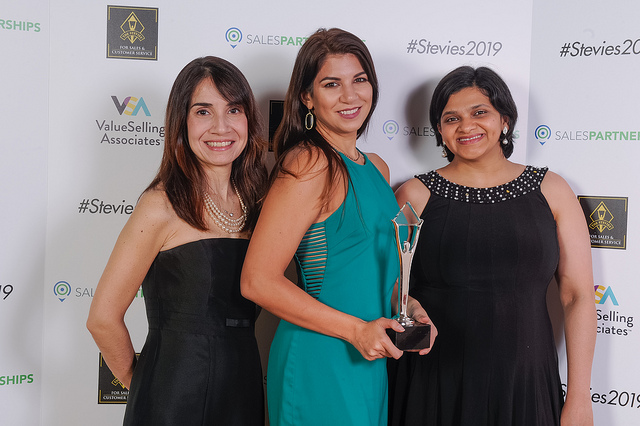
  More than 2,700 nominations from organizations of all sizes, in virtually every industry, in 45 nations were evaluated in this year’s competition. Finalists were determined by the average scores of more than 150 professionals worldwide in seven specialized judging committees and were announced last month.