The Stevie® Awards, organizers of the world’s premier business awards programs, today announced the Gold, Silver, and Bronze Stevie winners in The 17th Annual American Business Awards®.
All organizations operating in the U.S.A. – large and small, public and private, for-profit and non-profit - are eligible to submit nominations to the ABAs in a wide range of categories, honoring achievement in every aspect of work life, from customer service and management to public relations and product development. More than 3,800 nominations were reviewed in the judging process this year by more than 200 professionals, whose average scores determined the winners.
2019 Stevie winners will be celebrated and presented their awards during a gala event on Tuesday, June 11 at the Marriott Marquis Hotel in New York. Tickets are now on sale. The presentations will be broadcast via Livestream.

Publicis Sapient (Miami, FL) with eight Gold and four Bronze Stevies, and The XD Agency (Atlanta, GA) with seven Gold and one Silver, are leaders among the Gold Stevie Winners with wins in a wide range of categories. They are sure to be among the winners of the Grand Stevie Award trophies, the top overall winners in this year’s ABAs, who will be announced next week.
Among the organizations with the most Gold, Silver, and Bronze Stevie Award wins are ADP (Roseland, NJ), ARIIX (Bountiful, UT), Comcast Business (Philadelphia, PA), Cvent (McLean, VA), Darktrace (San Francisco, CA), Jeunesse Global (Orlando, FL), LABOV Marketing Communications and Training (Fort Wayne, IN), Lycored (Orange, NJ), Merkle (Columbia, MD), PAN Communications (Boston, MA), Reltio (Redwood Shores, CA), Rimini Street (Las Vegas, NV), and SoftPro (Raleigh, NC).
For a complete list of the Stevie Award winners announced today, visit http://www.StevieAwards.com/ABA.
Every new product or service nominated in The 2019 American Business Awards is included in voting for the People's Choice Stevie Awards for Favorite New Products, a worldwide public vote. Voting is now open at http://peopleschoice.stevieawards.com and will conclude on May 31. People’s Choice Stevie winners will be announced the week of June 3 and will be honored during the June 11 presentations.
“The nominations submitted for The 2019 American Business Awards were outstanding. The judges found the competition to be intense, and those recognized as Stevie Award winners should be immensely proud of this accomplishment,” said Michael Gallagher, president and founder of the Stevie Awards.
About the Stevie Awards
Stevie Awards are conferred in seven programs: the Asia-Pacific Stevie Awards, the German Stevie Awards, The American Business Awards®, The International Business Awards®, the Stevie Awards for Women in Business, the Stevie Awards for Great Employers, and the Stevie Awards for Sales & Customer Service. Stevie Awards competitions receive more than 12,000 entries each year from organizations in more than 70 nations. Honoring organizations of all types and sizes and the people behind them, the Stevies recognize outstanding performances in the workplace worldwide. Learn more about the Stevie Awards at http://www.StevieAwards.com.



 “To bring great stories to life, that’s the core message,” says President & CEO, Philip A. Nardone Jr.. “Those great stories are about the companies—their technologies and innovations—that are changing lives.”
 By just about any measure, it’s succeeding in that goal. Their customer service team upped its satisfaction score to 95.3% last year, from 94.2% in 2016. It did so after handling 13,500 more support tickets and 2,475 more calls than in 2016. What’s more, the service team, which operates out of the firm’s California headquarters, was also able to maintain an average wait time of just one minute.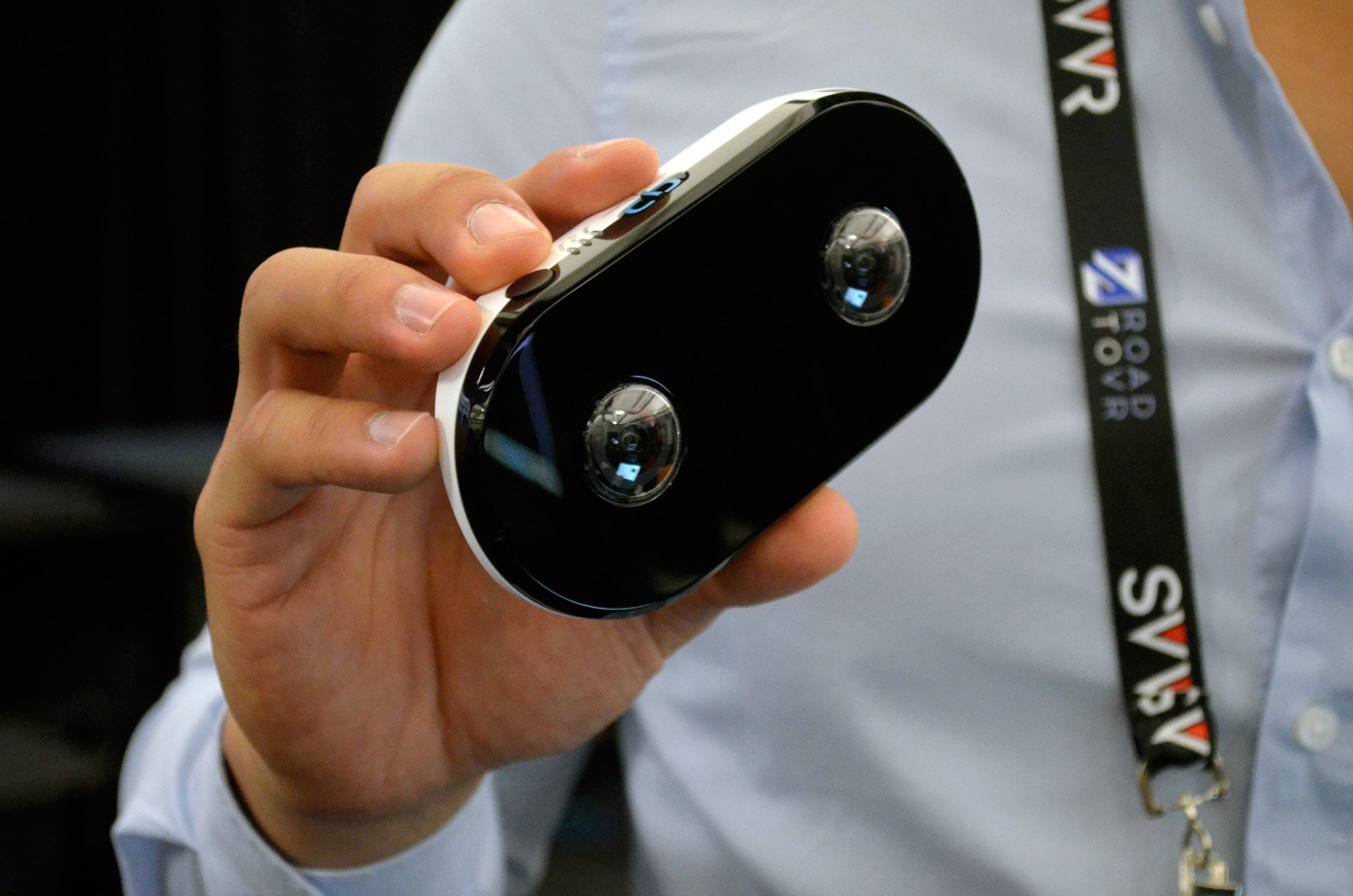
 Attracting—and especially retaining—a diverse workforce should be an important focus for employers in all sectors.
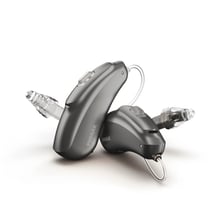 A member of the Swiss corporation Sonova Group, Phonak launched the world’s first behind-the-ear hearing aid in the early 1970s, and a few years later, they introduced the first digitally programmable hearing device. In the 1990s, Phonak developed the market’s smallest FM receiver, which paired with a wireless transmitter to minimize background noises and to enhance the clarity of individual voices.
 The sentiment also simply makes sense. The art of storytelling has connected generations, communities, and cultures for as long as humans have existed. Storytelling—or, in a broader sense, communication—is a foundational pillar of any civilization, culture, or people. The story and the emotion it elicits are why songs sell and why people celebrate holidays, attend events, and, ultimately, make purchases.
  “Our CEO, Steve Bilt, is a master at creating an effective corporate culture,” says the company’s chief marketing officer, Jody Martin. “He believes that, to be successful, the mission has to be motivating, both personally and financially to employees; inclusive to all employees, not just a few; and continually reinforced in a variety of ways.”